Newsletter signup

* Email
* First Name
* Last Name
Post Code
 

Stop Bugging Me

What is food poisoning? / What are bacteria? / What are viruses? / Who gets it? / Why eating animals increases your chance of infection / The chicken and the egg / Eggs / Types of food poisoning / Salmonella / Campylobacter / Escherichia coli / Clostridium perfringens / Listeria / Botulism / Vibro vulnificus bacteria / Bugs and Drugs / Prevention or poisoning? / Will cooking kill the food poisoning bacteria? / What can I do to protect myself and my family from food poisoning? / References

Introduction

Do you eat to live, or live to eat? Either way, what you eat can determine how you live - or even if you live. Foods can nourish us, or kill us if they are poisoned - and food poisoning is on the rise in the UK and worldwide. Foods are poisoned by microscopic germs that get into them: viruses, bacteria, parasites and even worms (which can grow large enough to see with the naked eye). Sometimes, it is the chemicals produced by these germs which cause us harm. In the following pages, you will learn about the major causes of food poisoning, what happens when you are poisoned and the steps you can take to protect yourself and your family.

Almost all food poisoning today originates from animal agriculture and foods. Even the relatively few recent outbreaks of food poisoning derived from various fruits or vegetables have been traced to contamination and runoff from animal manure. The danger has been worsened by intensive factory farming methods used in animal agriculture. Thus, the simplest, most effective step you can take to protect yourself and reduce the problem in society as a whole, is to avoid eating or serving animal products.

Modern life in the UK has many advantages. We have the benefit of technology making the most difficult tasks quick and easy. In one shopping trip we can buy enough foods for a month as best before dates get further away. Ready-made meals are becoming a part of everyday life, people eat out on a regular basis and take out and fast foods are readily available. However there is a price to pay for such "luxuries", and I don't just mean money. Food produced on a big scale leads to food poisoning on a big scale as there are many opportunities for bacterial and other infections. Food processing plants centralise the manufacture of meals so that one infected ingredient can spread to many products. And long shelf lifes can give bacteria the chance to grow to dangerous levels.

What is food poisoning?
You know what happens when you eat something that disagrees with you? Well, food poisoning is more than a disagreement. It can feel like a full out battle between your body and the food you have eaten! Usually between 12 and 24 hours after eating the contaminated food you feel abdominal pain which is quite mild at first but it becomes stronger and stronger. The pain can be excruciating and may lead to explosive diarrhoea. Your temperature may rise as high as 102°F/39°C. Vomiting may follow and dehydration (sunken eyes, a dry mouth and a rising pulse rate) may result. Usually the illness lasts for five to 10 days, with a further one to two weeks before you feel well again. The loss of salt and water from the body can lead to heart attacks and strokes. Food poisoning occurs as a result of eating food that is contaminated by metal, chemicals or micro-organisms, such as bacteria and viruses.

What are bacteria?
Bacteria are the main cause of food poisoning. They are micro-organisms that exist everywhere; in the air we breathe, in the water we drink and in the food we eat. Some bacteria live on our skin, in fact there are on average one million per square inch. There are also bacteria which live in our guts protecting us against infection. Too many bacteria in our system can lead to illness and, because they can reproduce at a phenomenal rate, it is easy for them to get out of control. If bacteria are allowed to incubate in the foods we eat then problems will ensue. Sometimes people are not poisoned by the bugs themselves, but by the chemicals which they release into food.

What are viruses?
Virus is the term applied to a group of infective agents. Viruses are smaller and simpler than bacteria and cannot reproduce unless they are inside a host cell. Some viruses infect cells and destroy them and some co-exist with their host. The viruses that infect bacteria and destroy them are called bacteriophages and they are among the most complex viral particles known. They can cause infection by killing off healthy bacteria or by causing toxic substances to be released into cells during the virus life cycle.

Click here to see table

Who gets it?
The following table shows that eating animal products is a big risk in terms of food poisoning and is making over a million people ill - some very seriously - every year. However, this figure is thought to be a conservative estimate (most people don’t report their illness) and the government reported in February 1999, that 9.5 million people in the UK get food poisoning each year, at a cost of £750 million to the National Health Service (1). Those most endangered by food poisoning are the elderly, pregnant women and children under one year old, but anyone can suffer. A massive 95% of all food poisoning cases are caused by eating animal products. Only 5% are from plant foods however much of this is from contamination by animal manure or from animal products. For example, a Listeria outbreak in New England was traced to coleslaw made from cabbage that had been fertilised with manure from a herd of sheep infected with the bacteria (33). A diet free of meat, fish, milk and eggs is by far the safest and one that I highly recommend.

Click for bigger pic

Why eating animals increases your chance of infection

It makes sense that bugs in animals are much more likely to infect us than bugs found in plants. Animals are closer to us biologically than plants and so, for example, bacteria in a cow are more adapted to living in cells that are similar to human cells, than bacteria from a carrot. In fact, people catch many diseases from cattle including tuberculosis, Listeria, cryptospiridium, Salmonella, E coli poisoning and BSE. We are also infected with various bugs from all other farmed animals.

Food poisoning is becoming bigger, more complex and harder to control. Meat is a main culprit because bugs love it! Bacteria can multiply extremely rapidly given the opportunity, and meat, cheese, eggs and milk all provide the ideal environment for bacterial growth. From cradle to grave, or should I say from birth to plate, food poisoning bugs have several chances to infect meat:

1. The conditions in which the animal lives:
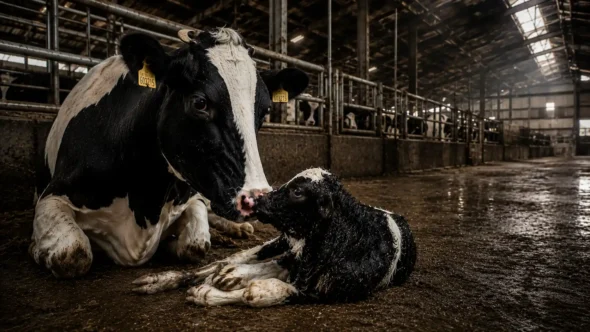
Like us, animals are at their healthiest when they are happy. Those that are placed under stress are more susceptible to infection and illness. As farming has become more and more intensive, livestock are primarily selected for growth rather than disease resistance. Factory farming is at the root of the problem of food poisoning. Thousands of animals squeezed into cramped, dirty and unnatural habitats leads to problems. The main aim of intensive or factory farming is to have maximum output with minimum input or basically to make a lot of money. It is well known that when people are forced to live in camps, slums and other overcrowded and unsanitary places infection is inevitable. Intensive farming involves crowding as many animals as possible into a limited space - making infection unavoidable. Bacteria and viruses thrive in this environment and can infect large numbers of animals within a very short time. Also, poor ventilation in buildings means that airborne bacteria spread easily.

Intensive farming means that every waking hour of the animal is manipulated to ensure a rapid and high yield. This is a strain on the animals involved and has its consequences.

E. coli O157 inhabits cattle in two forms. In its normal state in their gut, it is comparatively harmless. But when the animal is under pressure, like when cattle are subjected to the stress of being herded through the mass production process of a modern industrial slaughterhouse, the bacterium breaks out into the bloodstream. This causes diarrhoea and the potential for spreading the lethal infection becomes enormously greater (2). Add to this the safety problems which are increased because of a lack of testing, lack of controls, and lack of care at each stage of the food chain, and you have a recipe for disaster.

2. The food that animals eat:
In Britain, cows were fed the brains of other cows and sheep which led to a fatal disease - BSE or mad cow disease. After years of government denial, it was finally acknowledged in 1996 that this disease can pass to people via infected meat, causing a lethal brain infection called nvCJD (new variant Creutzfeldt-Jakob Disease). This shows the dangers of forcing herbivores to eat the remains of other animals. In the UK, ruminants can no longer be fed mammalian meat and bonemeal. Cattle can still be given tallow and gelatine from pig bones. In other countries, such as the US, farmed animals are still fed the remains of other animals, as well as their faeces (coated with molasses) - an ideal way to spread diseases.

3. At the slaughterhouse:
When an animal arrives at the slaughterhouse it may be covered in faeces. This is a major source of contaminated meat because potentially fatal organisms such as E. coli O157 and Salmonella can enter a meat processing plant on the skins of infected animals.

For slaughterhouse costs to be kept to a minimum the animals are put through the system as quickly as possible. Speed is of great importance in the process and similar principles apply for the preparation of chickens, cattle, sheep and pigs. Automated slaughter and processing on a factory production line means that the bacteria and viruses can spread widely. The same implements are used to slaughter one animal after another with little washing in-between so the bacteria spread rapidly between carcasses. When the animal is split open his insides fall out along with the contents of the gut, which is often where the bacteria live. It is likely that the bacteria will spill onto the rest of the animal and infect the meat. If a living animal went into a slaughterhouse bug-free, there is a good chance that she would emerge as a disease-ridden carcass. And don’t count on the government to stop contaminated carcasses from reaching the market. One investigation determined that meat inspectors in chicken processing plants have an average of two seconds per bird to check for signs of contamination (3).

4. Butchering and processing:
A lack of hygiene can cause food poisoning bacteria to be spread. Processed meats tend to be more dangerous because cooked meats are the ideal breeding ground for bacteria.

5. Restaurants/Food Service Industry:
A combination of poor food handling, inadequately trained staff and insufficient legal controls create an environment which is highly conducive to outbreaks of food poisoning.

6. In the home:
Cross-contamination from raw to cooked meat can spread bugs. There is also a chance of cross-contamination from raw meat to vegetables. Bad hygiene in the kitchen is a common cause of food poisoning.

7. Unfit meat:
There is a huge trade in illegally selling meat that is unfit for human consumption to shops and caterers nationwide. In March 2001 more than two tonnes of meat were seized by police at Denby Poultry Products, Ripley, Derbyshire along with other premises across the UK. The unfit meat was supposed to be used for pet food but instead was being sold for human consumption. In April 2001, 40 tons of unfit chicken meat were seized in Liverpool - destined for supermarkets, restaurants, schools and hospitals. The dangerous meat was being sold as meat paste, chicken burgers and had also been packaged as leg and breast portions and distributed across Britain.

Further, in June 2001 a report by the European Commission stated that British consumers cannot be sure of the safety of ‘British meat and other raw materials in mince, sausages, pies and other processed products’ (21). The report says that the ‘overall situation on meat products gives rise to serious concern’ and checks on raw materials for food were ‘weak or even non-existent.’ It also said that most meat plants could not trace the meat they were buying to their original sources.

Click for bigger pic

The chicken and the egg

Intensive farming reaches its peak with chickens so it is not surprising that chicken meat and eggs are the most common source of food poisoning bacteria. According to Time Magazine, bad chicken kills at least 1,000 people in the US each year. In the UK Salmonella is found in up to 30 per cent of broiler chickens on supermarket shelves (Food Standards Agency, 2000) (23) and infected nearly 175,000 people in 1999 (Public Health Laboratory Service, 22). Between 50 and 100 people die annually from Salmonella infections in the UK and it's not difficult to work out why. Broiler chickens (those reared for meat) are kept in appalling conditions and given growth promoters and other drugs daily. Thousands of them are squeezed into a shed, fed constantly in artificial light, and not cleaned out once during their six week lives. So not only do they live in their own excreta, they also live on top of the chickens that die in the process. Twelve per cent of broiler chickens don't survive the ordeal (5).

There are 2,000 different types of Salmonella bacteria and the intestines of the chicken act like a reservoir and provide the potential for the spread of bacteria. In recent years, the amount of chicken eaten in the UK has risen dramatically, so it is not surprising that food poisoning is on the increase.

Eggs
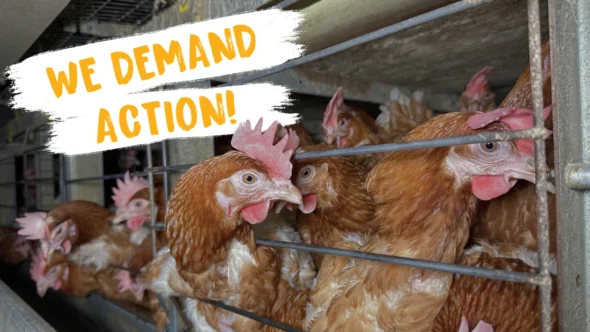
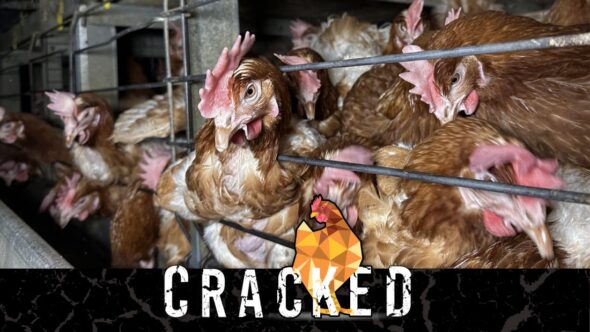
Battery (egg laying) hens are stacked in tiny cages in dim, stinking sheds. After an egg is laid it rolls into a collecting gully. Food and water are supplied automatically and lights are on for about 17 hours a day to promote egg laying. Up to 30,000 birds are kept in each of these sheds. The combination of a lack of fresh air, selective breeding and the caging of the birds in overcrowded conditions so that they cannot even exercise, has led to the spreading of disease and to distress and suffering.

Food poisoning bacteria can enter an egg by two methods.

1. Ovarian infection - the infection is already in the egg when it’s laid. Bacteria get through the gut wall and into the internal organs including the blood. Therefore the eggs become infected via the ovaries.

2. Transovarian - bacteria get inside the egg when the egg is washed (6).

You would not be able to tell by simply looking at a chicken or an egg whether it contains food poisoning bacteria. If you eat an infected egg that is not properly cooked, the Salmonella may grow in you! It has been known for years that modern intensive methods of broiler and egg production are riddled with Salmonella.

Types of food poisoning

Salmonella
Salmonella (S. typhimurium and S. enteritidis) infects at least 150,000 people a year and is usually caused by eating contaminated meat. Infections are most common in chicken eggs and meat but also occur in ducks, turkeys, cows and pigs. An animal infected with Salmonella excretes it and therefore will cross-infect any other healthy animal with which it comes into contact - at the farm, to and from market and in the slaughterhouse. It would be difficult to devise a better, more efficient system for recycling Salmonella than modern livestock farming. Its methods seem tailor-made to produce disease and spread infection among animals destined for human consumption.

According to scientists at the Central Veterinary Laboratory: “Bacterial infections can be spread by the airborne route in farm animals, particularly when reared intensively. For example, poor ventilation in poultry houses can cause high concentrations of ammonia to develop and irritate the respiratory tract, predisposing to infection” (24). Airborne infection of chicks and calves with Salmonella is well reported - and in laying hens, within two days of exposure to Salmonella, the hens were infected in their lungs, kidneys, spleen, ovary, oviduct and liver (25).

As already stated, infected animals excrete Salmonella in their faeces. In the case of pig units, where pigs are forced to stand in each others dirt; and in broiler chicken sheds or egg layers’ cages - the chance for cross contamination is very high. The unhygienic conditions of broiler chicken houses have been described by scientists studying Salmonella: “Broilers are reared in confined housing and eat, sleep and defecate on the floor inside the house... During transportation to the processing plant, some broilers defecate... When they are processed there is evidence that all broilers will have some faecal material on their feet and breast feathers” (26, 27). In fact, Salmonella contamination of chicken sheds can be so high that steam cleaning or pressure washing of the shed inbetween one batch of animals being moved out to be killed and the next batch of chicks moved in, can lead to an increase in bacteria levels! (26, 28)

A government report in December 2000 stated that up to 700,000 pigs slaughtered that year could have been contaminated with the Salmonella food poisoning bug. The government’s then MAFF (Ministry of Agriculture) calculated that 23% of the nation’s pigs are affected by Salmonella and that 5.3% of carcasses checked were infected (29).

Salmonella infections (caused by Salmonella enterica) can be serious in pigs - causing blood poisoning, acute or chronic enteritis and wasting (mainly in animals between weaning and 3 months). The septicaemic (blood poisoning) form kills almost all of its victims. Symptoms of the other forms include diarrhoea, fever, depression, weakness and sometimes paralysis and tremor. And sometimes infections only causes mild enteritis or no symptoms.

There has been huge media exposure of the effects of Salmonella poisoning in people - but rarely mentioned is the pain and suffering of the pigs.

Factory farms may help spread this disease as the bacteria infects young piglets via contaminated faeces. Salmonellae are also in slurry and dust within pig units - some of the indoor farms visited by Viva! (see Viva! report, Pig In Hell, 37) were thick with dust and slurry pits had not been cleaned out - the stench pervading every corner of the farms.

Further, live transport and markets transmit this disease. Up to 20% of Salmonella-free pigs are infected during transport and at the abattoir lairage from contaminated excreta (30).

Campylobacter
Campylobacter is the number one cause of food poisoning in Britain, with more than 50,000 cases reported in 2000 - and the true figure estimated between 540,000 and 5 million a year (PHLS, 22). The number of cases doubled between 1986 and 1997.

The bacteria has been found in half of fresh chickens in the UK (26) and in most turkeys. It can survive for three months on chickens which have been frozen (26).

According to the US Food and Drug Administration, half of Campylobacter infections are associated with either eating inadequately cooked or recontaminated chicken or turkey meat or handling chickens or turkeys. It is also caught from drinking unpasteurised milk. It is the leading bacterial cause of sporadic (non-cluster cases) diarrhoeal disease in the US and UK (9, 22).

Campylobacter infection occurs particularly in children and young adults often five to seven days after eating infected food. This is because it takes this long for the bacteria to multiply to huge amounts in the gut and cause disease.

Escherichia coli
E. coli is a normal inhabitant of the gastro-intestinal tract of humans and animals. It colonises a baby animal or human’s colon a few hours after birth and performs vital functions for the rest of the host’s life. However, some strains of E. coli can cause a wide range of diseases - and have increased in virulence with the potential to cause serious illness. In cows,
E. coli causes one-third of mastitis cases (31) and in pigs it can cause blood poisoning. Newly born piglets may die within 48 hours and outbreaks can happen in dirty farrowing sheds where litter after litter is affected. (37) E. coli is naturally present in pigs but becomes dangerous when pigs are factory farmed because their immune systems become suppressed due to stress. Also, Professor DJ Taylor states: “Dirty accommodation increases the number of infecting E. coli bacteria and makes disease more likely” (38).

In people, the PHLS estimates that there are at least 12000 cases of E. coli O157 a year (1999 figure) with 1084 reported. It usually causes severe abdominal cramps, bloody diarrhoea and vomiting and lasts up to two weeks. However symptoms can be much worse.

Sub-groups of disease-causing E. coli are distinguished according to their method of attacking the host:

a. Sticking to the gut wall.
b. Invading the lining of the gut.
c. Producing poisons (or toxins).

The most serious form of E. coli is known as VTEC- verocytotoxin-producing Escherichia coli - the verocytotoxin is a poison and potent inflammatory. This toxin can cause severe haemorrhagic colitis (which usually causes bloody diarrhoea) and damage to the kidneys. Another name for the verocytotoxin-producing
E. coli is E. coli O157.

E. coli O157 has been of concern since1982 when a discovery was made. Gastro-enteritis can lead to Haemolytic Uraemic Syndrome (HUS) which is a form of kidney failure. HUS is a complication of a VTEC bacterial infection. The bacteria sticks to the gut and releases a chemical into the bloodstream which causes kidney failure. It is most likely to affect the young and the elderly. VTEC is now thought to be the biggest cause of acute short term renal failure in children. Farmed animals, cattle in particular, are thought to be the reservoir of infection.

Since 1985 there have been between 100 and 200 cases per year in the UK. One in twenty HUS sufferers die and many of the survivors are left with irreparable kidney damage. According to the US government: "with intensive care, the death rate for Haemolytic Uraemic Syndrome is 3%-5%. About one-third of persons with Haemolytic Uraemic Syndrome have abnormal kidney function many years later, and a few require long-term dialysis. Another 8% of persons with Haemolytic Uraemic Syndrome have other lifelong complications, such as high
blood pressure, seizures, blindness, paralysis, and the effects of having part of their bowel removed" (11).

In 1993 there was an outbreak of E. Coli 0157 which began in the Pacific Northwest in early January. Over 450 people were taken ill, 21 were put on dialysis and three died. The bacteria were traced to contaminated frozen beef patties served in a fast food shop in Washington. A more recent E. coli outbreak was a little closer to home in Lanarkshire, Scotland at the end of 1996. There were 272 confirmed cases of E. coli food poisoning and there were thought to be at least 450 people affected. Twenty people died and the outbreak was linked to a butchers in Wishaw. The butchers supplied fresh and cooked meats and pies over a large geographical area and had lived up to EU standards.

E. coli bacteria is linked to many foods - turkey roll sandwiches, minced beef products and milk. According to the Advisory Committee on the Microbiological Safety of Food, many carcases are contaminated with E. coli 0157 at the slaughterhouse. The bacteria is transferred from the infected faeces on the skin and from the guts of the killed cow to the carcass. Professor Hugh Pennington who studied the outbreak of E. coli in Scotland stated that: “the speed of the production process within abattoirs needs to be controlled to permit adequate food safety standards.” (32) He criticised piece rate payment of workers - where workers are paid according to the numbers of animals they kill - therefore encouraging lack of animal welfare and hygiene.

E. coli 0157 has been around for about 20 years and has highlighted the weak spots in the whole food production system. It has shown that the UK government are putting the interests of the food industry above those of the consumer.

Clostridium perfringens
This bacteria normally lives in the human intestinal tract and generally does no harm. But if allowed to incubate in warm foods, this bug can cause problems. Infections due to Clostridium perfringens are most commonly reported in connection with beef and meat products, particularly soups and gravy. Outbreaks are linked to poor temperature control. Mass quantities of food left unrefrigerated for prolonged periods before consumption pose a risk. Clostridium perfringens bacteria are anaerobes, which means that they can only live without air and therefore in foods that are vacuum packed. They form spores, which multiply rapidly when food is cooling and heavy contamination occurs. Once ingested, the bacteria in the food produce an enterotoxin which leads to the food poisoning symptoms.

Listeria
Listeria monocytogenes bacteria has the unusual quality of being able to flourish at very low temperatures, i.e. in refrigerators (13, 33). Lactating animals can become infected in the udder, and if this happens large numbers of bacteria can be present in the milk (33). Pasteurisation should kill the bacteria. However, processing can go wrong. In California in 1985, 29 people died from the bug - from eating Mexican-style fresh cheese. It was found that infected raw milk had seeped into pasteurised milk at the dairy plant.

Listeria can infect meat. In France in 1993, 63 people died from Listeria poisoning after eating infected jellied pork tongues (35). In just three months during 1999 the US government recalled hot dogs and cold meats on eight occasions due to Listeria contamination. In December 1998, 35 million pounds of hotdogs and luncheon meats made by Bil Mar Foods, a subsidiary of Sara Lee, were recalled. Twenty people died in that outbreak. The Guardian reported that it may have been caused by the long-life of ready-to-eat foods, giving the bacteria a chance to grow as it survives in fridges and freezers (34). In fact moving Listeria from a low temperature to room temperature triggers it to grow faster than if it was kept at 37°C the whole time.

Listeria has been found to contaminate two-thirds of fresh and frozen chicken products (22); and the skin of 58% of pigs (26). It is also in sheep. It is known to be common in the slaughterhouse - a Dutch study found it in 100% of samples taken from the conveyor in an abattoir (26).

Listeria is commonly found in feta cheese, delicatessen and other ready to eat foods, including hot dogs and meat slices (14). It can survive vacuum packing and even microwave cooking! (36). Contracting listeriosis produces flu-like symptoms and is a big risk for pregnant women as it can lead to blood poisoning, miscarriages and stillbirths and can produce abscesses, meningitis, septicemia, and death (15). In the UK, an estimated 300 people become seriously ill with listeriosis each year; of these, about 75 die (16).

Botulism
This illness is relatively rare and brought on by eating improperly canned or preserved food contaminated with a toxin produced by the bacteria Clostridium botulism which is naturally present in the intestines of some animals and fish. The bacteria need certain conditions to thrive which are:

1. The absence of oxygen (e.g. vacuum packed food)
2. Nutrients and moisture (e.g. meat)
3. Absence of inhibitors
4. A suitable temperature - botulism bacteria can survive as low as 26°F/-3.3°C. Of the infected victims, between 20% and 50% die.

Vibro vulnificus bacteria
For those with more exotic tastes, according to the American Food and Drug Administration up to 10% of oysters and other raw shellfish contain this bacteria which can cause serious illness and has been known to kill people. Viruses are also emerging as an increasing cause of some outbreaks of food poisoning from shellfish (17). There is no way of sorting infected and non-infected shellfish, so it’s pot luck for the shellfish eaters.

Bugs and Drugs

Antibiotics have been the wonder drug of the last 50 years. It appears, however, that we have been taking them for granted. Most of today's doctors are willing to prescribe the drugs for almost any sign of infection, be it a sore throat, or a headache, or the virus-caused common cold, against which antibiotics are ineffective. If we take antibiotics for such minor ailments our body can forget how to defend itself against infection. Therefore our body's ability to strengthen its own immune system is reduced and we are more prone to illness. If the antibiotics used are broad spectrum (able to kill a lot of different kinds of bacteria) it is possible that useful bacteria will be wiped out along with the infectious bacteria. The body is then open to infection from other bacterial species, moulds, viruses and other microbes which can colonise the bacterial wastelands.

The smaller and simpler a species, the faster it can evolve to survive environmental change. Micro-organisms are tiny and simple and therefore able to evolve rapidly to side-step our attempts at control. In fact antibiotics put selective pressure on bacteria to develop defence mechanisms and to become resistant. Thus the “superbug” is born!

The National Academy of Sciences recently concluded that agricultural uses of antibiotics pose a risk to the public health (18). The British Medical Association's chairman Dr. Sandy Macara has stated that: "There is a real prospect that the majority of our antibiotics could become impotent for the purposes on which we have relied upon them for 40 years." This is a worldwide problem.

Modern animal farming depends to a large extent on antibiotics to produce cheap meat. Using antibiotics in animal feeds is a short term solution to the various diseases that occur during intensive farming. Antibiotics are widely used as a prophylactic - to prevent disease occurring in the animals. Looking at the level of disease and number of drugs used in pig farms in the UK is telling:

The government reported in 1998 (39) that:

“Treatment may be given to sows for metritis, mastitis and for diseases such as erysipelas and leptospirosis. In most indoor herds antibiotic treatment starts soon after birth. Piglets will receive drugs for enteritis and for respiratory disease. From weaning (usually 3 weeks) all piglets are gathered, mixed and then reared to finishing weights. Weaners usually develop post weaning diarrhoea caused by E. coli which occurs on day 3 post weaning.

“Post-weaning diarrhoea is quickly followed by a range of other diseases. Glassers Disease (haemophilus parasuis) occurs at 4 weeks, pleuropneumonia at 6-8 weeks, proliferative enteropathy from 6 weeks and spirochaetal diarrhoea and colitis at any time from 6 weeks onwards.

“At 8 weeks the pigs are termed growers and moved to another house. Here they will develop enzootic pneumonia, streptococcal meningitis (Streptococcus suis) and, possibly, swine dysentery. Respiratory disease may cause problems until slaughter” (MAFF, 1998).

Quite an indictment of factory farming!

The government reported that up to 10 antibiotics are used at any one time on some pig farms (39). The antibiotics are also used as feed additives to ensure that the animals gain weight. For reasons no one fully understands, antibiotics promote the growth of animals but in the process they foster the growth of bacteria that can resist antibiotics.

In simple terms, antibiotics have been massively overused by farmers. This has led to bacteria becoming resistant to the drugs so that when the same drugs are used to treat humans, they no longer work.

Antibiotics in livestock feeds have given bacteria the upper hand in human illness and hence they have been named superbugs. Antibiotic resistant bacteria, or superbugs, are passed on to meat-eaters when they eat infected flesh. After all, you are what you eat and if you eat animals you also ingest their diseases and the drugs they have been given.

Because the antibiotics given to animals are generally the same as those used for our medicine, a superbug in your body is likely to defeat any antibiotic that your doctor can prescribe. According to Stuart Levy of Tufts University School of Medicine, former president of the American Society for Microbiology, half of the antibiotics produced in the US today are used in agriculture (19). As long as intensive farming continues with the extensive use of antibiotics, coupled with the over-prescription of antibiotics to humans, the problems can only get bigger (20).

The most recent example of this is Salmonella DT104 which is resistant to antibiotics. Experts have linked this strain of food poisoning to pork, sausages, chicken and sick farmed animals. 25% or more of human Salmonella infections are now resistant to drug therapy. If antibiotic-resistant Salmonella are eaten in food they can remain dormant in the gut while being held in check by the normal intestinal bacteria. Then if antibiotics are used to treat some other illness they will kill off the normal gut bacteria and the Salmonella can resist the antibiotic and overgrow. This leads to serious illness. Many experts believe that this antibiotic-resistant form of Salmonella is a rising threat, and cases of Salmonella typhimurium have rocketed.

The problem is even worse than simply the antibiotic-resistant bacteria in the food animals themselves. Bacteria have the capability of rapidly transferring and spreading the antibiotic-resistance character to other bacterial species, including those which cause human diseases. Therefore, diseases which are not even related to food consumption may become resistant to antibiotics, and hence a much greater threat. The use of antibiotics in animal feed, by selecting for the predominance of antibiotic-resistant bacterial species, is thus a global threat to human health for every individual on earth. This irresponsible misuse of antibiotics is unilaterally disarming our species from our precious last line of defence, and devastating epidemics may well be the legacy of the hunger for inexpensive meat.

The use of antibiotics has made intensive farming possible, but at what price? The meat may be cheap enough, but what about disease control? What about animal welfare? What about safety measures?

Prevention or poisoning?
The choice is yours. Time and time again it has been proved that a meat-laden diet can lead to health problems and that a diet which is high in vegetable intake can provide protection from such problems. The evidence is clear and the action to take is simple. Basically we need to turn more and more to a vegan diet if we want good health and a long life, and let’s face it, who doesn't?

Will cooking kill the food poisoning bacteria?
Food which is left to sit for hours at room temperature provides the perfect conditions for Staphylococci to produce a chemical toxin. This poison is called an enterotoxin and it is not destroyed by heat, so cooking the food will not prevent illness. Staphylococci thrive in meat products, cold meats, milk and egg products. Most bacteria can be destroyed by cooking food at a constant high temperature for a long time. Certainly, eating meat that is not thoroughly cooked increases chances of infection. E. coli is known as the burger bug - infecting people when they eat burgers that are cooked on the outside but still raw on the inside. However, there is no simple way for the consumer to tell if the bacteria have been killed.

What can I do to protect myself and my family from food poisoning?

The individual alone is limited in what he/she can do to ensure that food is safe to eat. Because of factory farming, slaughterhouses and processors, it is effectively out of our hands to control food poisoning. But we can choose what we eat, how we cook and serve it. By far the best way to avoid contamination is by declining the dubious honour of being at the top of the food chain. A vegan diet is by far the safest for you, your family - and the planet.


Emanual Goldman is a Professor of Microbiology & Molecular Genetics. He has a Ph.D. in Biochemistry from M.I.T. and was a Postdoctoral Fellow in Pathology from Harvard Medical School. His outstanding career includes being a consultant in Pathology at Harvard Medical School; Assistant Research Microbiologist at the University of California, Irvine, Medical School; full Professor at the NJ Medical School-University of Medicine & Dentistry of NJ; Guest Associate Scientist, Biology Department, Brookhaven National Laboratory and Adjunct Professor, Ph.D. Program in Biochemistry, City University of New York. He has been President, UMDNJ chapters, of the American Association of University Professors; a Member of the American Cancer Society Peer Review Group and on the Editorial Board of the journal Protein Expression & Purification. He has had his works published in 58 scientific publications as well as having 68 abstracts printed in conference proceedings.


PRIVACY POLICY

Viva!, 8 York Court, Wilder Street, Bristol BS2 8QH, UK
T: 0117 944 1000 F: 0117 924 4646 E: info@viva.org.uk