
| |
|
| |
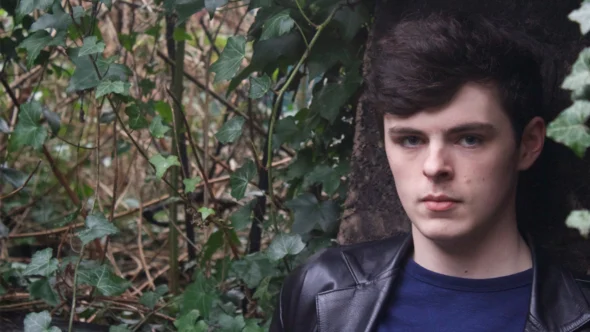
Paul with Juliet
Gellatley, founder of Viva! |
The Fight Goes
On
In a world exclusive,
Paul McCartney talks to Viva!’s Juliet Gellatley about compassion,
love and the
battle to save
the planet
Just as nature hates a vacuum, so commentators detest silence.
Give them no words to twist and no motives to doubt and they have
to invent them. For 28 years, Linda was the half of the McCartney
marriage who spoke out about the abuse of animals, who became a
voice for vegetarianism and who condemned cruelty with transparent
honesty. What was Paul thinking of all this time? Sneaking a quick
pork sausage, some would have you believe.
To imagine that soul mates – who for 30 years spent most
days together and every night bar one – could have such fundamentally
different values is laughable. Caring about animals wasn’t
just Linda’s thing – never has been.
“Linda spoke for both of us, in fact for all our family.
I want to reassure people that now she’s gone, the battle
doesn't stop. I will now try to step into her shoes – me
and the kids.”
It’s difficult to imagine the aching void that the death
of someone so close, so in tune with you, must leave behind but
Paul McCartney has things to say and he wants to say them. He doesn’t
speak of sorrow and loss but about pride and continuity and commitment.
I’ve barely sat down in his offices in Soho Square before
the words come tumbling out. It’s almost like he’s
been desperate to say them to someone and once started he doesn’t
want to stop, particularly for questions…“I must finish
my point – God, I do go on a bit don’t I? See, it wasn’t
just Linda. Trouble is I’m boring, she was much more succinct!”
Boring he isn‘t as he darts from one subject to another
but never losing eye contact with me. The words ‘my mate’ and ‘soul
mate’ keep poignantly reappearing as he talks about Linda
and occasionally he lapses into the present tense as if she was
still fighting alongside him. Suddenly he gets back to the point – the
same point and he wants to stress it again:
“Linda became the spokesperson largely because she had the
time available. I’d be off making music somewhere but in
fact she was speaking for both of us, for all our family. I really
worry that good animal activists around the world might think that
we’ve lost a powerful voice. Well, we have but my voice is
there now and I‘m going to try to use it.”
With the world’s media pounding on his door demanding to
know what’s next, I’m fascinated as to why Paul has
chosen Viva! as his vehicle. We’re usually prefixed with
the word ‘radical’ simply because we tell it like it
is. (Why solid research, science and a good dose of honesty should
be labelled radical, I don’t know – on the other hand,
society is now so deceived at all levels by bullshit and glitz
that perhaps I do understand.)
The truth is that planet earth is running out of time. Huge environmental,
human and animal catastrophes are developing fast and meat eating
is at the heart of them. One by one Paul touches on each – land
degradation, disappearing water, dying oceans, habitat loss, the
squandering of world food resources and the appalling cruelty of
a people in denial. He is well informed, concerned and has a message
to pass on. There are other, softer options than Viva! through
which to
do it. Perhaps this is a measure of his concern – a nailing
of his colours to
the mast.
Out of all these global issues, what is it that really motivates
Paul McCartney?
“It’s always been and will always be compassion for
animals. That’s it! It’s not the health thing, important
though that is. It’s respect for our fellow species. We’re
just another animal yet we think we’re so clever, know so
much but what have we done? We’re headed towards disaster
and won’t even acknowledge it. From the biggest to the smallest
we’ve beaten all the other species into submission. Couldn’t
we be magnanimous in victory? Couldn’t we now say, ‘Okay
guys, we’ve won, now let’s lighten up on these fellow
species’. Isn’t it time to see if there’s anything
they can teach us before we obliterate the whole lot of them and
ourselves
as well.”
 |
And of course he’s right. Evidence of the disintegration
of our life support mechanisms isn’t hard to find. It floods
in on an almost daily basis – the United Nations, the World
Health Organisation, World Watch, Oxfam and a hundred other concerned
bodies providing hard science in support of their warnings. They
make an inside page of the broadsheets for one day then disappear,
as ephemeral as a May fly.
Much more persistent and successful is the knocking copy – ignorance
passed from one journalist to another like a baton in a relay race,
with few ever bothering to check their claims. Typical is a full
page of bigotry and spite by Mary Kenny which appeared in the Express
on Sunday just days after Linda died. ‘Why Paul should be
made to eat his words’ it was headlined with the explanatory
strap, ‘unfitting memorial – it is dangerous to use
the death of Linda McCartney to promote vegetarianism’. But
obviously not to promote the career of Mary Kenny! Kenny then set
out a series of warnings which have become a journalistic mantra
but are, in fact, scientific nonsense. You’ve heard them
all before – teenagers at risk of anorexia, iron deficiency,
zinc deficiency, other nutrient deficiencies and uniquely, an increased
risk of cancer – 11 arrogant inaccuracies. What’s the
effect of years of this snide sniping by journalists?
“I think some of them are mad, I really think they're mad.
They’ve been eating a little too much British beef. In the
sixties I used to call them loveable rogues, now they‘ve
lost the loveable tag and the whole Diana thing shows that. There
are a lot of them who are not good people. It‘s sad and it‘s
in line with the very laddish phase we‘re going through.
“But I won‘t let them give me that whole ‘bad
nutrition‘ thing. Look, I’ve
helped raise a family of four kids and they couldn’t be healthier.
My son James is a big surfer, fit and healthy and he’s a
vegan. So far he’s the only one in our family who is a vegan
and he’s telling us all that we should be vegan, too. He’s
right and we know he’s right but we’re just a little
slow in getting round to it. He’s cool! I know there’s
now a whole heap of science to show that vegetarians and vegans
are healthier and live longer.”
And there is! One by one the world’s health advisory bodies – World
Health
Organisation, British Medical Association, American Dietetic Association – have
adopted a unanimous position. They are now quite clear that vegetarians
suffer less from all the degenerative diseases – coronary
heart disease, high blood pressure, atherosclerosis (blocked arteries),
strokes, diabetes, obesity, most cancers, gall bladder and kidney
diseases among them. Just as importantly, they say, vegetarian
diets can lower cholesterol levels and stop coronary artery disease.
They’re also clear about the reasons:
“Vegetarian diets offer disease protection benefits because
of their lower saturated fat, cholesterol and animal protein content
and higher concentrations of folate and antioxidants such as vitamins
A, C and E.” (American Dietetic Association.)
When you stick some percentages on the risk reduction it starts
to look pretty astounding – 25-50 per cent for heart disease
and cancer, 25-33 per cent for hypertension, 40-90 per cent for
diabetes, 75 per cent for gall bladder disease. So why are we still
having to fight to defend vegetarianism?
“The meat industry is big, it’s powerful and governments
like power, it’s where their support comes from. We’ve
seen it with the tobacco industry. When I see a thousand sheep
in a field I know, before he’s done anything, the farmer
has made £60,000 or whatever it is. It’s crazy. We’re
subsidising a cruel industry that does a heap of damage. Can anyone
explain that to me? No one else gets that treatment. I’d
love it if they gave me £20 for every record I make whether
I sell it or not, or if you got £20 for every copy of Viva!Life.
Subsidies have got to go and then the red meat industry will start
to collapse – then you’ll see the world’s biggest
outcry.
“We’re all paying for it, even veggies’ tax
money goes into it. The meat industry in Britain gets £20
million a year just to advertise meat with this ‘recipe for
love’ nonsense – probably ten times that amount if
you include all the individual companies. They’re all saying
meat is good, meat is natural, meat is necessary. I’d love
to see Linda's food get some government money or for you to get
some for your campaigns. But we’re not going to so we’ve
got to communicate, talk to people and support organisations like
Viva!. It reminds me of the cruise missile thing at Greenham Common.
They were laughed at but they did it – they got the job done.
I often said to Linda, ‘This idea of ours is either right
or wrong – and I know it’s right’. Yeah, the
farmers must be worried, they created the problems not us.”
And still are creating problems! On the day of Linda’s memorial
service I was
secretly filming conditions inside
intensive pig units. I drove down from Yorkshire to London and
arrived only just in time. Perfume from a host of flowers filled
the church of St Martin’s in the Field and the voices of
the students from the Liverpool School of Performing Arts were
so beautiful they made me cry. But still in my nostrils was the
overpowering stench of ammonia and faeces from the most appallingly
barren and overcrowded conditions in which thousands of bright
and intelligent animals are forced to live. Still in my ears were
their screams as they clambered over each other, pleading to be
let out.
Everywhere we pointed the camera we saw diseased, dead and dying
animals. In every enclosure there were the products of brutal neglect
and indifference – broken legs, abscesses half the size of
a football, ruptured stomachs, animals coughing from pneumonia,
others panting from meningitis, deep cuts and lacerations from
the perforated metal on which they have to live. These were approved
units which supply our supermarkets. The contrast with the interior
of the church was profound but it was a potent reminder of why
we were gathered together celebrating the life of someone who cared.
With real irony, on the day I interviewed Paul, the government
announced it was to launch a special pork promotion. And the theme?
Buy British because of our superb animal welfare standards!
“I think it’s very, very sad and belittling for us.
It’s something that says a lot about us. I see the future
of the planet as a clear choice – between doing that sort
of thing to animals or not doing it. There’s a sort of loathing
among a lot of farmers for what is actually giving them a living.
But it’s the fact that it’s encouraged and everyone
pretends
it’s all okay. It’s easier than doing something about
it.
“We can’t go on cramming creatures into battery cages,
broiler sheds, turkey sheds and so on. Where’s the compassion?
What the hell’s so wrong about compassion? What’s so
bad about it? Why should we have to keep on brutalising ourselves?
“At San Francisco University, they’re planning to
bombard monkeys with 145 decibels of sound which will make them
deaf and they say it‘s okay because they‘re anaesthetised
first. And it‘s all to prove that you shouldn’t listen
to loud music or stand under a jet ‘plane. Well we know that
anyway.
“I watched something on the telly where they had severed
the spinal cord of dogs and cats and they were walking around on
their front legs, dragging their back halves behind them on the
floor of the lab. These are quadrupeds, we’re bipeds and
it’s a nonsense to think you can learn about the human spine
by disabling cats and dogs. I defy anyone to look at this footage
and not be sickened. These animals don’t have the choice
and they don't have the voice.
“It became very difficult when Linda died because I said
I would support cancer charities and animal rights groups wrote
to me pointing out that many were heavily into vivisection – and
it’s true. A doctor we knew out in America just admitted
it as a matter of fact, innocently, like ‘well sure we do’.
What he doesn’t realise is that he won’t get a donation
out of me for that very fact. It’s like having Beagles smoke
for us, we don’t need that, we’ve outlived that period.
There are better alternatives but you’re not allowed to challenge
the status quo. It’s the same with agriculture.”
The fast flow of words and emotions begins to slow as Paul McCartney
becomes more considered, piecing beliefs together, connecting one
complex series of issues with another.
“Someone said that 90 per cent of land in Britain is used
to feed animals. That’s another crazy thing – so inefficient!
You can feed ten times the number of people on the food they give
to animals. There’s so many animals, there’s not enough
land any more and everything’s swamped with pesticides and
fertilisers – fodder, fruit, veg, the lot – to increase
output. It’s destroying just about everything – topsoil,
wildlife, water, birds. If everyone went veggie we’d need
only about half the amount of land and we could have real forests
and wild places again. But the RSPB still won’t say to people, ‘if
you want to save the birds, stop eating meat’, because they
think it’s unacceptable.
“My place is now organic. It wasn’t and it took three
years to get worms back in the soil. Then every year we saw more
birds come back. When I was a kid you could eat a raw carrot safely
but now you’ve got to wonder whether it’s a got a coat
of poison on it. One of the greatest ongoing experiments on humankind,
they reckon, is what we shove in our gobs. It’s never worked
out, you just shove it in – a Mars bar, a burger, a milkshake
and you wonder why you have a heart attack!”
And where does genetically modified food come into all this in
Paul’s world
perspective?
“People are trying to avoid modified soya and quite right.
But the biggest user of soya – about 90 per cent – is
the meat industry as livestock feed. Vegetarian products that may
contain soya will have to be labelled but meat, which comes from
animals fed on it, doesn’t have to be labelled. This is a
lovely little loophole that the meat industry is going to exploit
and I think people should be aware of it. There’s so many
things people aren’t aware of.
“Livestock farming is one of the biggest destroyers of the
planet. When you
see the Amazon being cut down for hamburger cattle, that’s
pretty obvious. What isn’t so obvious is the drying up of
the water table and rivers in the US and elsewhere. Animals use
up huge amounts of water and there are billions of them. And it’s
all done in the name of something that benefits humans when in
fact it’s the opposite. It’s all about attitudes, no
one thinks they’re the one who has to change. Take Prince
Philip…”
There’s an exchange of glances between Paul and his publicist. ‘Are
you certain you want to say this?’
ask the eyes. Paul’s return glance says ‘for sure’.
Sir Paul McCartney, Knight
of the Realm, is about to have a go at the Realm.
“Linda was the ballsiest woman, a very strong lady and she
once took him on and that was a nice little moment. Because she was
American she talked to him just like he was a bloke, not all reverent
like the British do. She said: ‘You’re the head of
a worldwide wildlife organisation, how can you
go out shooting birds?’ ‘Are you vegetarian?’,
he asked, trying to catch us out.”
Paul’s mock posh accent doesn’t shed the Liverpudlian
entirely. “‘YEAH’, we both answered. President
of a wildlife organisation shooting birds, that’s hypocrisy.
It’s not even sport. They choose a bird that doesn’t
even fly well, a pheasant. Let’s see him try and shoot swallows,
they’re not so easy to catch.”
No Don Quixote is Paul McCartney, tilting at windmills, but someone
who has decided to tackle head on some of the most intractable
problems facing the world, mostly out of sheer instinct.
“I’m not saying all of what I think is watertight, this
is just a feeling. Don’t blame me if I don’t know exactly
how many cows are slaughtered or exactly how long it takes one of
them to die. I don’t know all the facts but I can get the facts.
For me this is about the total lack of respect for animals and for
the planet and that we can’t go on doing what we're doing forever.
“Eventually, there’s got to be change. If you can
feed ten times the number of people by not passing food through
animals first and then killing them, that’s got to make people
think. Even if you don’t care about animals, that’s
a highly efficient economic argument and even McDonalds likes efficiency.
“As it is, China is being sold factory farming in a big
way and India is following, being raped of its principles. As some
sensible lady Indian minister said on telly: ‘We’re
entering the hole that you’re starting to climb out of’.
It’s sucking in the world’s supplies of grain and soya
which are needed for people. It’s costing lives. That’s
why we’ve got to get our message out there. We’re part
of that Western machine. If we don’t, the only message they’re
going to hear is McDonalds’. There’s got to be more
people like us or there’s not going to be a world for any
of us, McDonalds included.”
I don‘t know if Paul realises it but he is echoing almost
exactly the views of the World Health Organisation, which in 1991
called for a complete reversal of the West’s agricultural
policies. Their message was unequivocal – an end to the promotion
of meat and dairy products, an end to factory farming and better
use of land by growing crops for people not animals. It also warned
of dire consequences if we continued to influence the developing
world's agriculture. The report was interpreted by the Daily Mail
as a call for global vegetarianism – and it was right. But
what’s happened? Exactly the opposite and the report has
disappeared without trace.
We all have more or less the same access to information so why
are some people inspired to act and others aren’t? How did
it start for Paul and Linda? The sudden connection between lambs
gambolling outside the window on their farm in Scotland and leg
of lamb on their plate is now pretty well known. But whose idea
was it?
“It was Linda’s memory that it was me who said we
should try going vegetarian. Loving animals so much, she wasn’t
going to say no. To be honest I can’t remember who said it
but she credits me with it. She was a
very gracious person.
“I think the deciding factor for us was the love of animals – just
simple
compassion. We had very different upbringings but we talked about
our childhoods, the kind of thing you talk to your mate about and
discovered we were very much the same. Linda was brought up in
Scarsdale and would go to this open space in the posh area where
she lived. There was a little stream running through it and no
one ever went down there but Linda. She’d take friends and
show them things, like lifting a rock with a salamander underneath
it.
“For me it was tadpoles and newts on the other side of the
world. I’d wander around the outskirts of Speke on my own
with the Observer’s Book of Birds. So we have this lovely
image of she and I at about the same age, around 12 or so, both
loving nature both doing similar things. But that wasn’t
what attracted us to each other – she was a photographer
and I was a musician and it was more on that level. We didn’t
even realise it at first but the more we got to know each other
the more apparent it became that we had this deep connection which
was animals. Neither of us had talked about it before. I hadn’t
in the Beatles and she hadn’t as a photographer.
“It influenced so much of our lives later on. When I had
a quiet day, I would go out into the woods and clear a new trail
through the trees – that was one of my joys. Then we would
go out on our horses together and I would say, as a surprise, ‘Let’s
ride down there’ and she’d get so excited. But it was
also great for the badgers and foxes and rabbits who use these
paths of mine and that feels nice.
“She was very passionate about animals and would go to any
lengths to help them. She wasn’t a business woman really,
not at all. She was free spirited – very free and easy and
not wanting to get hooked into anything. Then one day I almost
saw a light bulb go off over her head – ding – ‘If
I could save one animal!’. And that’s where the food
idea came from.
“During the live exports demonstrations the rationale for
starting the food became so clear. I heard someone saying ‘We
want them on the hook not the hoof’ and I couldn’t
believe it. I asked Carla (Lane) if they were veggie and she said
that a lot of them weren’t. It seemed hypocritical to me.
Like the RSPCA man on TV following a lorry full of animals through
Europe. He kept saying ‘Oooh, I could do with a pork pie!’ Did
he really have to say that? What was his game – trying to
make out he was just like everyone else, not a crank. Again, hypocritical.
We wanted it to be easy for them to go veggie, hence the meat substitute
foods. We wanted to convert meat eaters.
“It was suggested we should call them Paul McCartney foods
but that sounded too Beatley, it didn’t ring true. So it
was Linda McCartney, mother and cook. So many women subsequently
came up to Linda and thanked her, saying they wouldn’t have
known what to feed their daughters when they went veggie without
her stuff in the freezer. That was the big thing, Linda made vegetarianism
mainstream. The motivation wasn’t money or fame it was ‘If
I could just save one animal!’.
“We’re going to continue with the foods. As we go
into the new century everyone is looking for new ideas, good ideas.
I see vegetarianism as the best idea about. In fact it’s
not a new idea – it’s a very old idea – but it’s
a new one for our Western outlook. And if the veggie thing takes
hold and all these ideas click in – no animal cruelty, no
fur, no animal experimentation – then there really is some
sort of hope for mankind. Otherwise, forget it.”
Paul’s secretary comes in for the second time to remind
him that it’s time to go. But I can sense that we’re
at the end now, anyway. I’m aware that I’ve just interviewed
someone who started life as a Liverpool working class lad but who
was a legend by the time I was born. Through sheer talent, he has
broken just about every record in the musical hall of fame. Without
actually asking for it, he has been handed the cloak of respectability
given to few popular musicians; has been presented with an entrance
ticket to the establishment – if not to the innermost circle
then certainly the outer courtyard. And I’m also aware that
in the preceding hour he has, bit by bit, hacked away at some of
the principal props which support that establishment.
Never really the centre of controversy, he now appears to have
taken a calculated decision to court it. Perhaps when you’ve
been confronted by the sad truths which have faced Paul McCartney
in recent months, you make honest judgements about what matters
and what doesn’t. He comes back to where he started.
“I'm doing this interview so all the good people in the
world will know that I’m going to be as active as Linda – people
like the Australian groups fighting with Viva! to save the kangaroo.
It’s just that until recently, I had the luxury of Linda,
the world’s greatest luxury, the world’s greatest soul
mate who took on the role for me – the role of saving animals.
It was a long time ago that Linda said, ‘If I can save just
one animal!’. We were able to say to her, ‘Hey babe,
you’ve saved so many – millions of them, miles and
miles and miles of animals.‘”
Paul and Linda McCartney have four children – Heather, Mary,
Stella and James.
|