

in search of
the real
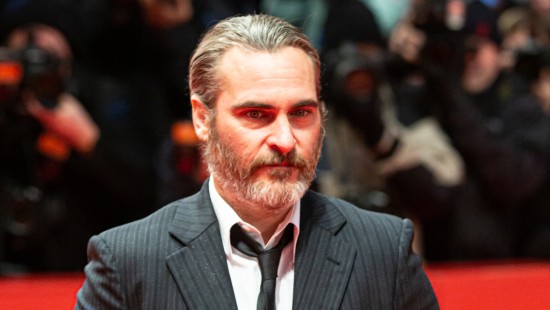
Jerome Flynn
Juliet Gellatley meets one of
Britain’s favourite heartthrob actors
to find out what makes him tick. She doesn’t have to dig very deep…
The great thing about acting is that it allows you to hide inside
other, very different people. You can be whoever you want to be,
even run away from your real self if you find that self disappointing
or burdened with emotional baggage. Many actors, who are fluent
and mesmerising when speaking words written by someone else, about
someone else, stumble uncertainly when they have to speak their
own words in public.
I was about to meet a man who represented machismo in the raw
in the role of Paddy Garvey in Soldier Soldier. As DC Tom McCabe
in Badger he was still macho but with a heart. With the duo Robson
and Jermone he was something entirely different – a pop star.
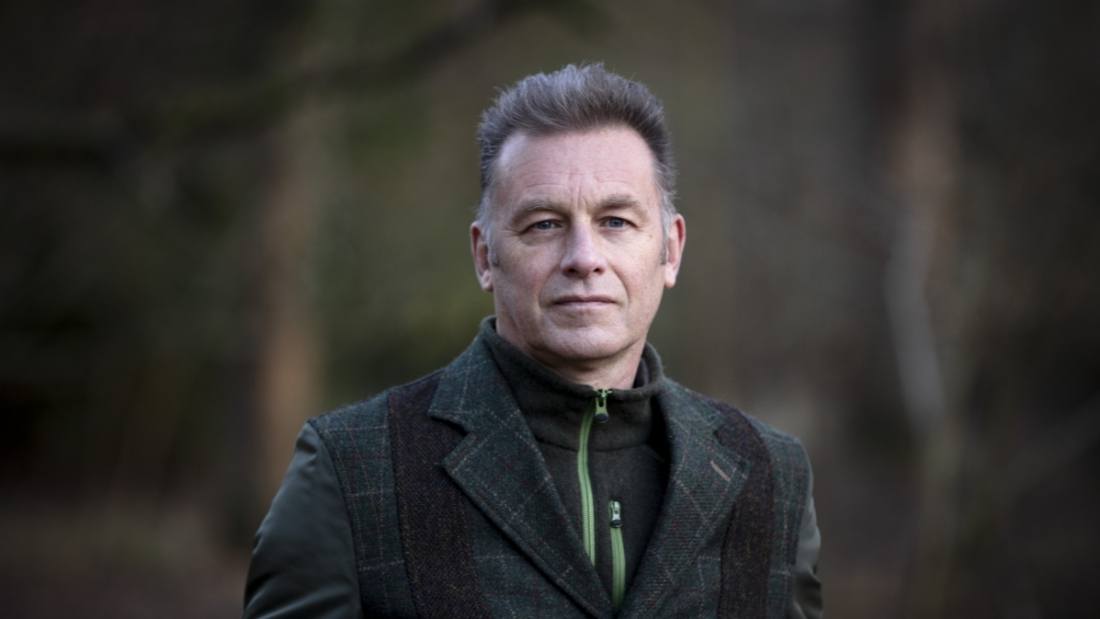
As he climbed off his bike at the top of London’s green and
sunny Primrose Hill and tentatively shook hands, he was clearly
none of these characters. He was Jerome Flynn and the antithesis
of macho despite a five-times broken nose.
It quickly became obvious that here was a man who, far from hiding
or pretending to be someone he isn’t, has done the opposite.
He has subjected himself to deep scrutiny in search of whatever
it is that lies deep inside – his spiritual core, if that
doesn’t sound too pretentious. Even more interesting – he
seems to have found it! And an essential part of it is humility – a
denial that human beings are superior to any other creature in
the grand scheme of things.
“There’s been just one evolutionary force from the
big bang until now and so all living things are made of the same
star dust. We each might vibrate differently but we are all from
the same source of life. How could humans possibly be separate
and apart? I believe there is an inherent perfection in this life
source and by focusing on ourselves we lose sight of that. It’s
this which makes me care for all life – but of course, you
can’t expect any gratitude for that.
“It’s what we do that counts – the effect we have – and
for that I don’t need any motivation. The thought of not being
a vegetarian is ridiculous, it’s just unthinkable, like going
backwards. I won’t eat meat again for the same reason I gave
it up in the first place – I don’t want to be part of
all that suffering.”
There are some silent, almost apologetic veggies; there are others
who are cheerfully outspoken; but I have met few who have delved
so deeply into their own psyche to explore the reasons for their
commitment.
So what kind of background was it that produced Jerome Flynn,
committed vegetarian, animal lover and seeker of answers? A pretty
idyllic one, it seems – The Waltons meet Darling Buds of
May, kind of a life. There was Jerome, his sister Kerry and brother
Daniel and seemingly endless woodland and open countryside stretching
away from their house a few miles outside Sevenoaks in Kent. They
even
had their own special piece of wooded land. So Jerome’s childhood
memories are of exploring together, swinging from trees, making
camps – and of course, animals.
Mum, Fern, was a kind of Mother Teresa of the animal kingdom and
took in a variety of sick and injured wild creatures, nursing them
back to health before releasing them into the wild again, including
two families of fox cubs whose mothers had been gassed.
Their house, apparently, was a bit of a wreck so they pulled together
to make it habitable, grew their own vegetables and split logs
for the wood-burning stoves. You can almost hear the voices: “Have
you finished cutting that wood, Jerome boy.” “Sure
have, ma!” It’s the kind of life most of the world
wants for their children.
In his teens, Jerome began acting in school plays before stumbling
into the role of John Procter in The Crucible at Sevenoaks Youth
Theatre. It was that which decided him to give professional acting
a go:
“Because of acting, people showed more interest in me than
they had before. All right then – girls showed more interest
in me than they had before!”
Three years at the Central School of Speech and Drama in London
followed – “one of the most exciting periods of my
life.” It was here that a friend turned him vegetarian. Whenever
Jerome sat next to her in the canteen with a sausage on his plate,
she would growl at him. Of course, he eventually had to ask why
she so disliked him eating meat and the answer changed his life.
Being away from home, Jerome became aware of just how much the
countryside and all it contained was a part of him and how lucky
he had been to have such a wonderful childhood and such intimacy
with nature and living things. Perhaps its not surprising, then,
that if anything haunts him it is animal suffering.
“I just want it to end and I believe that everyone can make
a contribution to that, whether they’re famous or not. I
do think about it because the alternative would be to close down
my conscience and that would be the biggest crime of all.”
 |
|
| Jerome with Viva!’s Juliet Gellatley |
|
With factory farming now the norm, the scale of animal suffering
is almost impossible to comprehend, supported by the crass claim
that Britain has the best animal welfare standards in the world.
Does this convince Jerome?
“It doesn’t really matter if our standards are better
than someone else’s or not. So long as we are inflicting
any suffering on animals for profit it is entirely unacceptable
because there is no excuse for cruelty. The claim is used to justify
waiting and doing nothing, to justify evil, to justify suffering.”
This is the first time I have met Jerome and the reason is to
interview him on camera for our anti-factory farming video, Not
in My Name. However, he has so much to say that we talk much further
and wider than is necessary for the few short sound bites required
for our video. He wants to talk, wants his views to be publicised
and feels that communicating is a vital part of getting people
to change their thinking and their habits. And he knows it’s
not easy to get them to do so.
“People are afraid of change, of taking responsibility because
once they – we – start to care, our lives are turned
upside down. All the things we accept as normal are challenged
and the floodgates to our heart open up. Then everything’s
up for grabs – our values, the structure of society, the
status quo – most of which is connected to selfishness and
our desire to keep control. But once we start to care, caring becomes
limitless and limitlessness is very frightening.
“The whole political structure that we’ve come to
accept would collapse if people genuinely started to care – our
profit-driven world would fall apart. We’re talking about
a revolution, a transformation of society, but it can happen and
the amazing thing is, it can happen very quickly.”
The question which naturally follows is whether society’s
failure to change and bring about this transformation poses any
threat to our future or can the human race continue indefinitely
to thumb its collective nose at what’s happening without
threatening its own survival.
“I have no doubt that unless we radically change our attitudes
and start to get in touch with our consciences,
the earth, the environment, the entire biosphere will be threatened.
Like the tobacco industry, the companies responsible can always
find scientists to say that there’s no threat but if you
listen to those who really know, they’re all saying that
we have to do something soon otherwise the globe will be a desperately
miserable place to live.”
Rightly or wrongly, we tend to think of acting as the epitome
of egotism, of cut-throat individualism and self promotion. But
none of this seems to fit with the impassioned views that Jerome
is expressing. So which set of values dominate? He doesn’t
have to think before answering.
“If I hadn’t met my spiritual teacher and learned
about myself, I don’t think I would have carried on as an
actor. I’d always though that an acting life and a spiritual
life didn’t go together but that’s just a cop out.
It’s our attachment to the material world – to our
job, our possessions, our loved ones, our relationships – which
causes many of the problems. Understanding this means I no longer
see myself in any kind of stereotyped actor way and I know that
acting is not the be all and end all. And funnily enough, I think
this has made me a better actor.”
The teacher Jerome refers to is a man called Andrew Cohen who
promotes a philosophy closely related to Tibetan Buddhism. What
sparked Jerome’s interest was Cohen’s book, Enlightenment
is a Secret, given to him by Linus Roache, son of Bill Roache,
the ever-lasting and avuncular Ken Barlow of Coronation Street.
For someone who has clearly shed the scales from his eyes, I wondered
if acting would be enough to satisfy Jerome in the future? Or does
he feel it’s time to get his hands dirty – so to speak – in
the fight to save animals and what’s left of this pretty
fantastic planet of ours.
“I have thought about getting more directly involved. I
enjoy acting and singing but they’re just a job in what can
be quite a sick industry. When I was at college, I thought I could
make a difference by becoming famous but now I wouldn’t be
at all surprised if I ended up working in a much more hands-on
way.”
In a profession where 80 per cent of people are unemployed at
any one time, you tend to think that only total dedication to acting
will lead to success – or sustain it – and that doesn’t
leave much time for anything else. How does this square with Jerome’s
beliefs?
“It takes away the drive to be successful for the wrong
reasons, such as wanting to be famous for the sake of it. This
need to be special is all part of society’s sickness and
what disconnects us from our fellow human beings, the environment
and the animals around us.”
I wonder if this was why Robson and Jerome had such a short but
highly-successful run with three number one hits. And where did
the idea come from in the first place?
“Money did have something to do with it. When the offer
was made we thought about it, we laughed about it, reckoned it
would ruin our careers and that people would snigger at us. I’d
been thinking about taking some time off but I was having such
fun with Robson that it just didn’t happen. We reckoned that
singing together would also be fun so decided to give it a go.
“And we did have a lot of fun. But the pop world is even more
extreme than acting and because we were immediately successful we
were put on some kind of pedestal. People started to look up to us
but in the wrong way and for all the wrong reasons. Everyone wanted
a piece of us, wanted us to be a certain way and we were becoming
parodies of ourselves – losing touch.
“We found it hard to keep our feet on the ground and as
our friendship was always the most important thing, we just got
out. I think our timing was about right. Music is a powerful medium
and so I’m writing a few songs at the moment – songs
with a bit of conscience to them. Mind you, I’ve been doing
that for a while so I’d better start getting it together.”
Out of our conversation comes a realisation that we have many
things in common and one in particular is swimming with the same
dolphin. Funghi is a bottle nosed dolphin and clearly a bit of
a complex character. He appears to have forsaken his own kind for
human company and appears most days at a small inlet leading into
Dingle harbour in County Kerry. I first swam with him 13 years
ago and then again couple of years ago.
The effect was extraordinary – the feeling of making contact
with a wild and highly intelligent animal. There was also a deep
sadness that despite what humans have done to their species, they
still accept us and want to connect with us. They are so much more
forgiving than we are. I’m not surprised to find that Jerome
had very similar emotions when he first swam with Funghi.
“I felt like he was a teacher and the message was that you
had to let go. When I wanted something from him, he wasn’t
interested. He just wanted me to relax and be at home in his environment.
Once I did that he wanted to play and the message he gave out was
so clear – ‘let go, let go, let go!’
“I was with my brother Daniel and an old fisherman called
Paddy Garvey (Jerome later adopted this name for his character
in Soldier Soldier). Paddy took us out in his boat and we got into
a ring which he pulled behind on a rope, away from all the other
swimmers. Fungi loved it, jumping over us as we moved through the
water. We did it day after day.”
As Jerome talked, my own experiences with Funghi came back to
me. Of the disrespect and lack of sensitivity shown to this unique
creature by a crowd of rowdy divers. Of how Funghi completely ignored
them and came to me as I kept my distance from them. And how early
one morning I lost concentration when I was the only person in
the bay and floated out to sea hanging on to my lilo. As I tried
to quell the panic and slowly started to head back to shore, Funghi
appeared from nowhere and swam backwards and forwards alongside
me, staying with me until I made it back into the bay, when he
disappeared after doing a triumphal leap over me. That experience
made
me feel very special.
Come to think of it, meeting Jerome Flynn and listening to his
deeply sensitive, passionate and caring philosophy on life also
made me feel very special. Thanks Jerome!
|